


Category: News

A new support programme is launching across Devon to help people who are finding work difficult because of their physical or mental health.
WorkWell offers free, personalised support for people aged 16 and over whose health is affecting their ability to stay in work, return to work after an absence, or find employment. Whether someone is managing a long-term condition, experiencing stress or anxiety, recovering from illness or injury, or simply feeling overwhelmed by balancing health and work, WorkWell is designed to help.
The service is built around one simple principle: everyone is different. That’s why every person referred to WorkWell is matched with a dedicated coach who takes the time to understand their situation, listen to what’s important to them and develop a personalised plan of support.
“WorkWell is here to help”
Jessie Leigh, WorkWell programme lead for NHS Cornwall, Isles of Scilly and Devon, said: “Most of us will experience a time when our health makes work harder than it should be. For some people, it can feel isolating or overwhelming, and they may not know where to turn for support.
“WorkWell is here to change that, offering free, personalised support that puts the individual at the centre. Whether someone wants support to stay in work, return after time away, or simply build their confidence and wellbeing, WorkWell is here to help.
“We’re really excited to be bringing WorkWell to Devon and helping more people realise they don’t have to face these challenges on their own.”
WorkWell coaches can help people explore workplace adjustments, access health and wellbeing services, build confidence, improve work-life balance, connect with local community support, and identify practical steps to achieve their employment goals.
The programme also works closely with employers, healthcare professionals and local organisations to create healthier, more supportive workplaces where people can thrive.
As part of the wider scheme, WorkWell is developing a network of Employer Champions across Devon. These employers will help promote good workplace wellbeing, share best practice and encourage open conversations about the relationship between health and work.
“I’d highly recommend WorkWell”
One person who has already experienced the benefits of WorkWell is Melanie Portlock, who sought support while managing a long-term back condition alongside work.
Melanie said: “I didn’t realise how much I was suffering in silence. Living with a long-term condition was affecting so many parts of my life, but I found it difficult to talk about what I needed. WorkWell gave me the space to have those conversations and helped me find practical ways to manage my health and work together.
“It’s turned around how I work and how I look after myself. I’d highly recommend WorkWell to anyone who’s struggling. You don’t have to struggle on your own.”
Accessing WorkWell support
Accessing WorkWell support is quick and straightforward. Individuals can refer themselves directly by filling in a simple online form, while referrals can also be made by GPs, healthcare professionals, employers, Jobcentre Plus work coaches and other support organisations.
Once someone makes a referral to ask for support, one of the friendly WorkWell coaches will be in touch within 72 hours.
There are no lengthy assessments or complicated processes to navigate – a simple referral is all it takes to start a conversation with a WorkWell coach, who will then work with the individual to understand their circumstances and identify the support that could help them stay in, return to or find work.
Free for both individuals and employers, WorkWell is funded by the Department for Work and Pensions and NHS England and commissioned by NHS Cornwall and Isles of Scilly. Support is delivered by coaches working within local partner organisations, ensuring people across Devon can access tailored advice and practical help close to home.
To find out more visit: WorkWell Devon – NHS Cornwall and Isles of Scilly
Photo (left to right): Tarn Lamb, non-executive member, South West Peninsula ICB Cluster; Jessie Leigh, WorkWell programme lead for NHS Cornwall, Isles of Scilly and NHS Devon; Rt Hon Dame Patricia Hewitt DBE, Former Secretary of State for Health; Nicholas Warrington, Deputy Director, Keep Britain Working, Department for Work and Pensions (DWP); Professor Dame Carol Black GBE, Independent Adviser and leading expert on health and work; John Govett, Chair NHS Devon ICB and NHS Cornwall and Isles of Scilly ICB; Andrew Pryde, Assistant Director, Joint Work & Health Unit, Department for Work and Pensions (DWP); Jon Siddall, CEO, Health Innovation South West
As summer 2026 gets underway, NHS Cornwall and Isles of Scilly and NHS Devon are putting local people at the centre of their seasonal health campaign, launching a new network of Pharmacy First Ambassadors to help spread the message across communities.
From fishermen, parents with young children, older residents and members of the LGBTQ+ community, the Pharmacy First ambassadors will reflect the diversity of life by sharing their own voices and experiences. They will play a vital role in encouraging others to choose Pharmacy First for common health concerns, helping ensure the message reaches every corner of the region.
There are more than 90 community pharmacies across Cornwall and the Isles of Scilly, and more than 200 across Devon, offering expert healthcare advice without the need for an appointment. Easy to access and often open evenings and weekends, pharmacies provide a convenient first step for many everyday conditions.
The campaign comes as rising temperatures bring an increase in seasonal health issues, including dehydration, sunburn, hay fever and insect bites, many of which can be treated quickly and effectively at a local pharmacy.
Pharmacy First Ambassador, fisherman, Nigel Taylor said: “I’m proud to be a Pharmacy First Ambassador. Busy days at sea can mean making time to see my own GP is difficult, so knowing I can visit my local pharmacist for help with common conditions is invaluable.”
Almost all pharmacies in the region offer the Pharmacy First service, meaning patients can access a private consultation and, where appropriate, receive prescription-only medication, without needing a GP appointment.
The service covers seven common conditions:
• Earache (children aged 1 to 17)
• Infected insect bites (aged 1 and over)
• Impetigo (aged 1 and over)
• Shingles (aged 18 and over)
• Sinusitis (aged 12 and over)
• Sore throat (aged 5 and over)
• Uncomplicated urinary tract infections (women aged 16 to 64)
NHS Cornwall’s Chief Place and Transformation Officer, Dr Chris Reid, said: “Our new Pharmacy First Ambassadors are helping us connect with communities in a more meaningful way this summer. By working with people who understand local lives, from our coastal and rural industries to families and community groups, we can build greater confidence in choosing the right care.
“Whether you live locally or are visiting, the quickest way to get advice and treatment for many common summer health problems is to visit a pharmacy. Before heading to A&E, contacting your GP or calling NHS 111, think Pharmacy First. Pharmacists are highly trained professionals who can assess symptoms, provide treatment where appropriate, and advise if you need more urgent care.”
As part of the campaign, Cornwall Pride is among the partners helping to amplify the message, ensuring it reaches LGBTQ+ communities across the county.
Cornwall Pride’s Chief Executive Officer, Matthew Kenworthy Gomes, said: “We’re really pleased to be part of this year’s NHS Cornwall summer campaign. Visibility and representation are so important, especially when it comes to health and wellbeing. By sharing these messages and seeing people from our communities involved, we can help ensure everyone feels included, informed and confident about accessing the care they need.”
The summer campaign was officially launched at Stithians Show, on Monday 13 July by Pharmacy First Ambassador, Nigel Taylor, and clinical lead pharmacist for NHS Cornwall, Amanda Fidelis.
Amanda said: “Community pharmacists play a vital role in helping people stay well during the summer months. As highly accessible healthcare professionals, we can provide expert advice and treatment for a range of common conditions through the Pharmacy First service, helping people get the care they need quickly and conveniently. Whether it’s managing minor infections, offering self-care advice, or supporting people to stay safe in hot weather, pharmacies are often the first place people can turn. By making use of Pharmacy First, patients can access timely support without needing to wait for a GP appointment, helping them enjoy a healthier and safer summer.”
Alongside encouraging people to think Pharmacy First, the campaign highlights the importance of simple self-care steps during the warmer months, such as staying hydrated, wearing suncream, and taking precautions in strong sunshine.
People can also visit their pharmacist for a wide range of other health needs, including blood pressure checks, emergency contraception and advice on heat rash, making them a highly accessible source of care during the busy summer months. Also, if you run out of regular medication, whether at home or on holiday, your own GP can arrange for prescriptions to be sent electronically to a local pharmacy for convenient collection.
If you do become unwell, pharmacies can also advise on next steps and refer you to other services if needed.
By combining practical advice with trusted local voices, the NHS hopes this year’s campaign will help more people access the right care, quickly, so residents and visitors can stay well and enjoy everything summer in Cornwall and the Isles of Scilly has to offer.
For fast, practical healthcare advice this summer, think Pharmacy First.
Pharmacy First – NHS Cornwall and Isles of Scilly
NHS Devon is celebrating the success of its first pioneering Community Appointment Day in Exmouth which, amongst other initiatives supported by the elective care team, has helped drive a dramatic reduction in waiting times for people needing musculoskeletal (MSK) physiotherapy services across east Devon.
More than 100 patients were seen at the event held in May, which was delivered in partnership with Royal Devon University Healthcare NHS Foundation Trust and community partners, formed part of a wider NHS Devon-led recovery programme designed to improve access to community MSK services and support people to access both specialist health services along with the breadth of VCSE and other local services available.
The Community Appointment Day brought together physiotherapists, healthcare professionals and community organisations to provide a more holistic approach to supporting people with MSK conditions.
Alongside clinical assessment and treatment, patients were able to access advice and support focused on wider health and wellbeing needs, helping them manage their conditions and remain active and independent.
Attendees also had the chance to talk to representatives from 23 local organisations, such as Active Devon, Seachange, Open Door Exmouth, and the Hope Programme.
By offering this easy and immediate access to a wide range of local services supporting with housing, work, mental health, long-term conditions, physical activity, and more, patients were able to leave feeling supported and linked in to what is available within their community.
The programme of work which includes the CAD approach, was developed under the leadership of the One Devon Elective Improvement Programme, with support from NHS England’s Getting It Right First Time (GIRFT) programme, as part of a focused recovery effort targeting one of the most challenged community waiting lists in Devon.
The results have been significant:
- Since January 2025, the number of patients waiting longer than 18 weeks for a community MSK physiotherapy appointment provided by the Royal Devon University Hospitals NHS Foundation Trust has fallen from around 2,500 patients to just 69. Over the same period, the overall community MSK waiting list has reduced from approximately 7,000 patients to 5,000.
- Across Devon, performance has improved to 95.8 per cent of patients being seen within 18 weeks, significantly exceeding the national target of 78 per cent and making Devon the best-performing Integrated Care Board in the South West region for community MSK waiting times over 18 weeks. Performance at University Hospitals Plymouth and Torbay and South Devon NHS Foundation Trust has remained in a strong position, with both services offering patients appointments well within 18 weeks.
The recovery programme has been overseen by NHS Devon’s elective care team and has included a range of initiatives such as additional “super clinics’ in the form of mutual aid supported by the team at Torbay and South Devon NHS Foundation Trust.
This also provided Torbay colleagues with an early insight into the use of the new electronic patient record system and early training.
The recovery programme at Royal Devon University Healthcare NHS Foundation Trust included systematising full waiting list validation, generating improved demand and capacity intelligence and waiting list management information, and the introduction of new ways of working including group clinics and virtual appointments.
Early outcomes from the Exmouth Community Appointment Day have been highly encouraging, with many patients receiving support that enabled them either to be discharged, directed to more appropriate services, or begin treatment sooner.
Overall, around 72 per cent of patients of patients attending the CAD have either been supported and discharged or referred on to the most appropriate service.
John Finn, Deputy Chief Operating Officer at NHS Devon said: “The success of the Exmouth Community Appointment Day demonstrates what can be achieved when NHS organisations, local providers and community partners work together around the needs of patients.
“By taking a whole-system approach, we have not only been able to make sure patients have been seen sooner for physiotherapy services but also helped people access the wider support that can make the biggest difference to their health, wellbeing and ability to stay active.
“Reducing the number of people waiting more than 18 weeks from around 2,500 to just 69 is a remarkable achievement and reflects the dedication of teams across Devon. Most importantly, it means people have been able to access the care and support they need much sooner.
“We are now looking at how the CAD model can be expanded across Devon and into other specialties, working closely with neighbourhood teams and local communities to understand the types of specialist input required for some of our local populations and how we can continue to provide timely, joined-up care closer to home.”
The Community Appointment Day forms part of a wider review of the MSK pathway across Devon, with partners exploring how the approach can become a routine part of service delivery in the future.
Further community appointment events are now being planned across North Devon, Plymouth and Torbay as NHS Devon continues its work to improve access, reduce waiting times and ensure people receive the right support at the right time, in the right place.

Health leaders across Devon and Cornwall are asking people to take a bit of extra care during the current hot spell, especially those living with long-term health conditions.
A Heat-Health Alert has been issued for the next five days by the UK Health Security Agency (UKHSA) and the Met Office, highlighting the risks that higher temperatures can bring to people’s health.
Hot weather can put extra pressure on the body. It can lead to dehydration, overheating, and make existing health issues worse. People with conditions like heart or lung disease, diabetes, kidney problems or mental health conditions may be more affected.
Some medications and having more than one condition can also make it harder for the body to stay cool and properly hydrated.
Here are some simple steps to stay well:
- Try to stay out of the heat, particularly between 11am and 3pm
- Drink plenty of fluids regularly
- Keep your home cool by closing blinds or curtains during the day
- Avoid strenuous activity in the hottest part of the day
- Check in on friends, family and neighbours, especially older people or those living alone
- Store medicines correctly and take them as prescribed
If you’re living with a long-term condition, it’s especially important to:
- Keep an eye on your symptoms and seek advice if they get worse
- Make sure you have enough medication and understand how heat might affect it
- Stay cool and hydrated to reduce strain on your body
People with heart, lung or kidney conditions may be particularly vulnerable to dehydration and heat-related illness. Those with diabetes should monitor their blood glucose levels carefully, as hot weather can affect blood sugar control and insulin storage.
People living with dementia may be less aware of the effects of heat or forget to drink enough fluids, so carers and family members are encouraged to provide regular support and reminders.
You can contact NHS 111 for urgent advice, or 999 in an emergency.
Some people are more vulnerable in hot weather, including:
- People aged 65 and over
- Babies and young children
- People with long-term health conditions
- Those on multiple medications or living alone
Dr Chris Reid, Chief Transformation and Place Officer at NHS Cornwall and Isles of Scilly said: “While many people enjoy the warmer weather, it can be more challenging for those with underlying health conditions. We’re asking everyone to take a few simple steps to stay well and to check in on those who might need a little extra support during this time.”
For more advice on staying safe in hot weather, visit:
www.nhs.uk/live-well/seasonal-health/heatwave-how-to-cope-in-hot-weather/

Additional advice for people living with long-term health conditions
Hot weather can affect people differently depending on their health condition and the medicines they take. The NHS is encouraging anyone with a long-term condition to be aware of how heat may affect their health and to plan ahead during periods of very hot weather.
Heart conditions
Hot weather causes blood vessels to widen, making the heart work harder to maintain blood pressure. People living with heart failure, coronary heart disease or other cardiovascular conditions may find symptoms become worse during extreme heat.

Patients should:
• Stay well hydrated unless they have been advised to restrict fluids.
• Avoid strenuous activity during the hottest parts of the day.
• Seek medical advice if they experience worsening breathlessness, dizziness, swelling or chest discomfort.
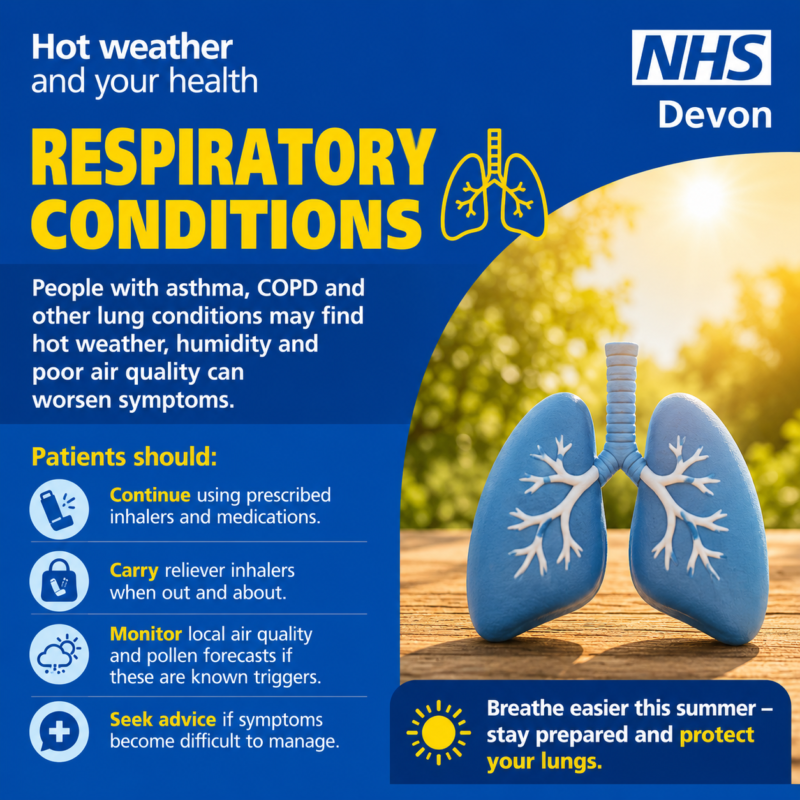
Respiratory conditions
People with asthma, COPD and other lung conditions may find hot weather, humidity and poor air quality can worsen symptoms.
Patients should:
• Continue using prescribed inhalers and medications.
• Carry reliever inhalers when out and about.
• Monitor local air quality and pollen forecasts if these are known triggers.
• Seek advice if symptoms become difficult to manage.
Diabetes
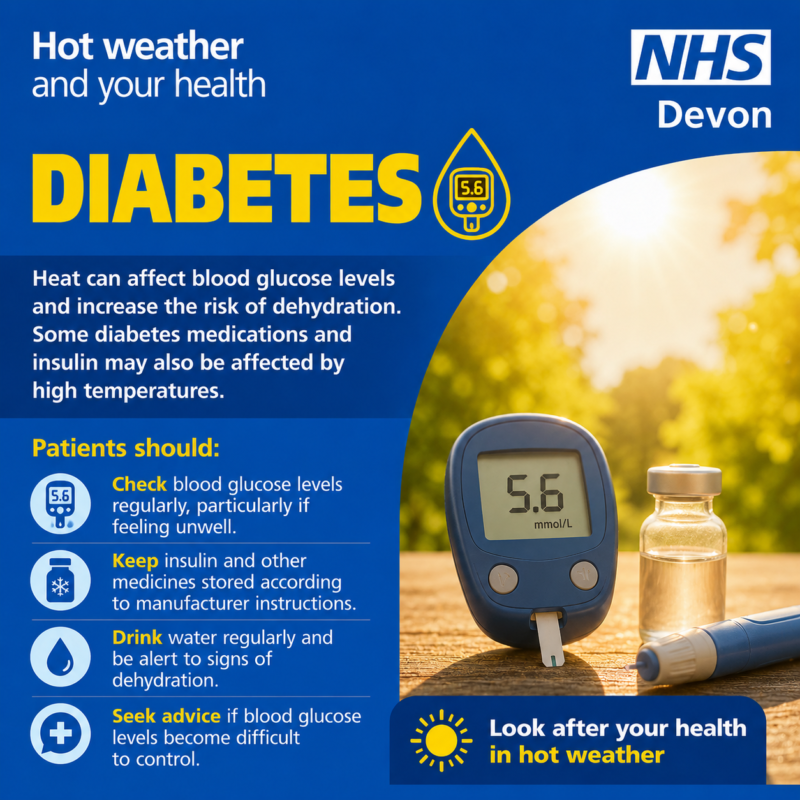
Heat can affect blood glucose levels and increase the risk of dehydration. Some diabetes medications and insulin may also be affected by high temperatures.
Patients should:
• Check blood glucose levels regularly, particularly if feeling unwell.
• Keep insulin and other medicines stored
• Drink water regularly and be alert to signs of dehydration.
• Seek advice if blood glucose levels become difficult to control.
Kidney disease
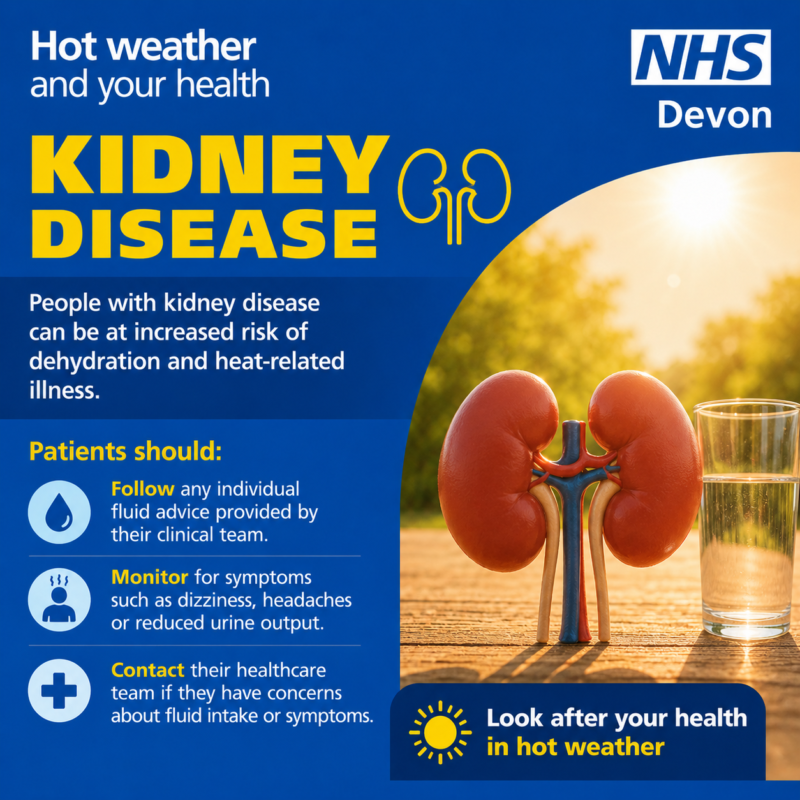
People with kidney disease can be at increased risk of dehydration and heat-related illness.
Patients should:
• Follow any individual fluid advice provided by their clinical team.
• Monitor for symptoms such as dizziness, headaches or reduced urine output.
• Contact their healthcare team if they have concerns about fluid intake or symptoms.
Dementia and cognitive impairment
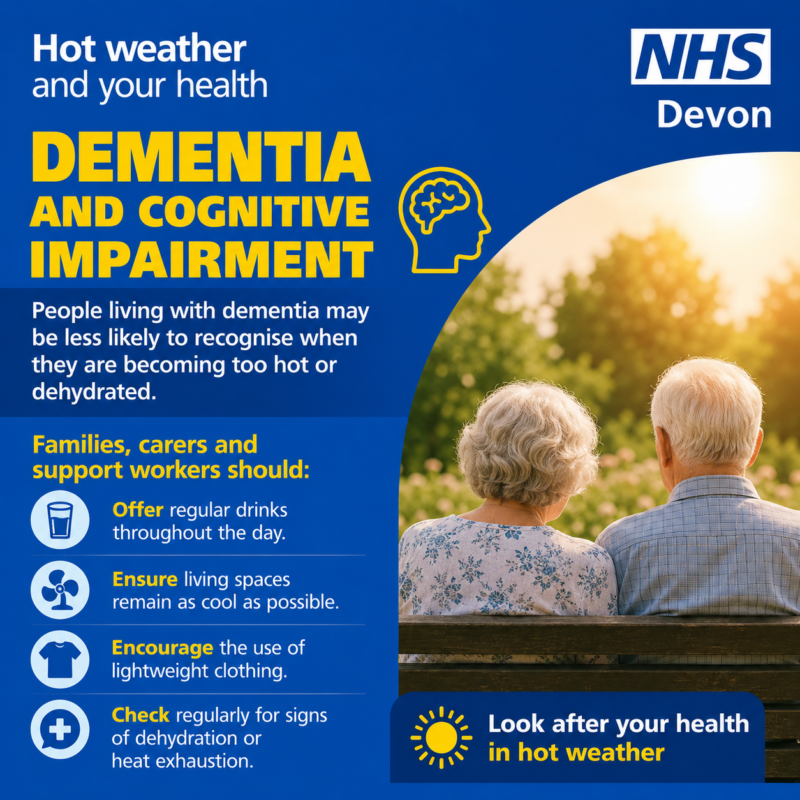
People living with dementia may be less likely to recognise when they are becoming too hot or dehydrated.
Families, carers and support workers should:
• Offer regular drinks throughout the day.
• Ensure living spaces remain as cool as possible.
• Encourage the use of lightweight clothing.
• Check regularly for signs of dehydration or heat exhaustion.

Mental health conditions
Some mental health conditions and medications can affect the body’s ability to regulate temperature or recognise when someone is becoming unwell.
Patients should:
• Stay connected with family, friends and support services.
• Maintain regular routines where possible.
• Seek help if they feel their mental health is worsening during periods of hot weather.
Planning ahead
People with long-term conditions are encouraged to prepare for hot weather by:
- Keeping enough medication supplies at home.
- Ensuring they have access to drinking water.
- Identifying the coolest room in their home.
- Arranging regular check-ins with family, friends or carers if they live alone.
- Knowing who to contact if their symptoms worsen.
Residents and visitors are being reminded to plan for their healthcare needs ahead of the upcoming bank holiday and half term holidays.
With thousands of people expected to visit the county over the long weekend and school break, NHS Devon are encouraging everyone to make sure they know which service is right for their needs, to order repeat prescriptions in plenty of time and keep a well-stocked medicine cabinet at home for minor illnesses and injuries.
Community pharmacies can offer advice and treatment for a range of common conditions, while NHS 111 online and by phone is available 24 hours a day to direct patients to the most appropriate care.
Minor injuries units and urgent treatment centres can also help with non-life-threatening issues, helping residents and visitors alike get the right care, in the right place, as quickly as possible.
Ahead of the bank holiday weekend, the advice is to:
- Order and collect repeat prescriptions early, particularly if you are travelling or planning to be away over the bank holiday
- Use community pharmacies and the Pharmacy First service for advice and treatment for common conditions, free contraception services and free blood pressure checks
- Call 999 in a life-threatening emergency – when someone is seriously ill or injured, or their life is at risk
- Visit NHS 111 online or call 111 if you need urgent medical advice or are unsure which service you should use
- Check in on vulnerable family members, friends or neighbours and make sure medicine cabinets are stocked with essentials
- Seek urgent dental care via NHS 111, where advisers can assess your needs and arrange an appointment if required
- Access mental health support through NHS 111 if you or someone you know is experiencing a crisis
Contact your own GP practice first
Visitors to Devon are reminded that their first port of call for GP care should normally be their home GP practice, which can often provide advice through online, phone or video consultations and arrange for prescriptions to be sent electronically to a pharmacy of your choice in Devon.
Community pharmacies
Community pharmacies can provide expert advice and treatment for a range of common conditions such as earache (children up to 17 years) insect bites and urinary tract infections, (women only up to 64 years), free contraception services, and free blood pressure checks without the need for a GP appointment through Pharmacy First, making them a quick and convenient option for many minor illnesses while people are away from home.
Access the NHS App 24/7
Use the NHS App to order repeat prescriptions, check symptoms and access a range of NHS services, which can be particularly helpful when some services are closed over the bank holiday. The app is free to download and available to use at any time.
Check opening times
Check the opening times of local Urgent Treatment Centres or Minor Injury Units by visiting our interactive map on the One Devon website here
In an emergency
For life-threatening emergencies – such as someone who is unconscious, struggling to breathe, having a severe allergic reaction, experiencing a seizure for the first time, or suffering serious injury or bleeding that won’t stop – always call 999.
By planning ahead, ordering prescriptions early and making use of community pharmacies and NHS 111, visitors and residents can help ensure everyone stays well over the bank holiday and half term holidays, while protecting urgent and emergency services for the most serious conditions.
How to safely enjoy the hot weather
Before hot weather arrives, it is a good time to think about what you can do to protect yourself and your family and friends from heat and potentially higher UV levels. If spending time outdoors remember to take water or other hydrating drinks with you and seek shade to keep cool and reduce your UV exposure.
The hottest time of day is often between the late morning and the late afternoon, with highest UV levels between 11am and 3pm, however, check local weather forecasts and UV information for your area.
For some people, especially older people and those with underlying health conditions, the summer heat can bring real health risks. Temperatures indoors can be higher than temperatures outdoors.
Ask if your friends, family or neighbours need any help keeping cool.
The Pharmacy First service, available in most local pharmacies, frees up GP appointments for patients who need them most and gives people quicker and more convenient access to safe and high-quality healthcare.
Trained pharmacists can provide consultations, treatments and where necessary prescription medication for a range of conditions.
Last year, Devon’s community pharmacies delivered 231,000 consultations for a range of common conditions and minor illnesses, a 47% increase from the year before, reflecting the huge collaborative effort to support people locally access the care and advice they need.
The expanded pharmacy service also provides free blood pressure checks and contraceptive services, which also saw a 154% increase in its use from the previous year.
As the May bank holiday arrives visitors and local people are being encouraged to continue to make the best use of NHS services, especially community pharmacies through the Pharmacy First service.
Chris Reid, Chief Medical Officer for NHS Devon, said:
“The Pharmacy First service in Devon has been a great success. It’s staggering that nearly a quarter of a million people in Devon are now choosing their local pharmacy to get quick, expert advice and treatment for common conditions—without needing to see a GP.
“We would like to thank community pharmacy teams for their continued dedication in delivering a vital and widely used service to local people.
“Over the May bank holiday, we’re encouraging residents and visitors across Devon to plan ahead and make the most of the support available through Pharmacy First.
“By choosing the right service and preparing ahead, visitors and residents can help ensure urgent and emergency care is available for those who need it most.
A spokesperson for the Devon Local Pharmaceutical Committee said: “Pharmacy First is making a real difference for patients across Devon. People can walk into their local pharmacy and receive prompt, expert care for minor illnesses without needing a GP appointment.
“Our pharmacy teams are proud to be supporting local communities and helping ensure NHS services are used in the right way.
Ahead of the bank holiday weekends, the advice is to:
- Order and collect repeat prescriptions early, particularly if you are travelling or planning to be away over the bank holiday
- Use community pharmacies and the Pharmacy First service for advice and treatment for common conditions, free contraception services and free blood pressure checks
- Call 999 in a life-threatening emergency – when someone is seriously ill or injured, or their life is at risk
- Visit NHS 111 online or call 111 if you need urgent medical advice or are unsure which service you should use
- Check in on vulnerable family members, friends or neighbours and make sure medicine cabinets are stocked with essentials
- Seek urgent dental care via NHS 111, where advisers can assess your needs and arrange an appointment if required
- Access mental health support through NHS 111 if you or someone you know is experiencing a crisis
Contact your own GP practice first
Visitors to Devon are also reminded that their first port of call for GP care should normally be their home GP practice, which can often provide advice through online, phone or video consultations and arrange for prescriptions to be sent electronically to a pharmacy of your choice in Devon.
Community pharmacies
Community pharmacies can provide expert advice and treatment for a range of common conditions such as earache (children up to 17 years) insect bites and urinary tract infections, (women only up to 64 years), free contraception services, and free blood pressures checks without the need for a GP appointment through Pharmacy First, making them a quick and convenient option for many minor illnesses while people are away from home.
Access the NHS App 24/7
People can also use the NHS App to order repeat prescriptions, check symptoms and access a range of NHS services, which can be particularly helpful when some services are closed over the bank holiday. The app is free to download and available to use at any time.
Check opening times
People can check the opening times of their local Urgent Treatment Centres or Minor Injury Units by visiting our interactive map on the One Devon website here
In an emergency
For life-threatening emergencies – such as someone who is unconscious, struggling to breathe, having a severe allergic reaction, experiencing a seizure for the first time, or suffering serious injury or bleeding that won’t stop – always call 999.
By planning ahead, ordering prescriptions early and making use of community pharmacies and NHS 111, visitors and residents can help ensure everyone stays well over the bank holiday while protecting urgent and emergency services for the most serious conditions.
Teams and individuals across Devon and Cornwall are celebrating after being named regional champions in the first NHS Excellence Awards, recognising outstanding work to improve care for patients, communities and staff.
The awards highlight innovation, quality improvement and leadership across health and care. Regional champions were selected by NHS panels for their work across the South West.
Several organisations in Devon and Cornwall were named regional champions in seven of the 10 categories:
- Delivering value – Drugless CT coronary angiography service. The Trust redesigned the pathway to eliminate the need for IV beta blockers and empower specialist cardiac CT radiographers to independently run high‑throughput CTCA lists. University Hospitals Plymouth NHS Trust
- Working in partnership – A system-wide partnership for compassionate End-of-Life Care, means recognising when care should shift from doing more, to doing what is right, supporting patients to be comfortable, heard, and, wherever possible, in the place they want to be. University Hospitals Plymouth NHS Trust
- Quality improvement – Acute medical admission pathways, a new model enabling appropriate patients to be admitted directly to acute medicine, safely bypassing the Emergency Department. University Hospitals Plymouth NHS Trust
- Valuing our people – Reasonable Adjustments Project, working alongside people with learning disabilities or autistic people who may need small, practical changes to help them navigate healthcare. Devon Partnership Trust
- Neighbourhood health – Cornwall and Isles of Scilly Neighbourhood Health. Cornwall Partnership NHS Foundation Trust
- Patient involvement and choice – Isaac’s Story – A powerful lived‑experience story from a young deaf man, Isaac which showed the challenges in accessing health and public services highlighting the communication barriers that were preventing deaf people in Cornwall from accessing care. This led to local engagement with deaf people to understand more and has lead to system-wide changes to raise deaf awareness, training for staff and the creation of communications materials in British Sign Language (BSL) for Deaf people including a national partnership with Diabetes UK to create BSL diabetes advice films: New diabetes films in British Sign Language as part of work to turn the tide on diabetes – NHS Cornwall and Isles of Scilly . NHS Cornwall and Isles of Scilly Integrated Care Board in partnership with Diabetes UK, Hearing Loss Cornwall and lived experience members from the Long Term Conditions Group.
- Improving health outcomes – The Market Health Hub, a cross-border neighbourhood health initiative submitted by Coast and Country Primary Care Network. The hub-based initiative brings healthcare directly into the Holsworthy livestock market, offering a free, drop-in service for people who may not routinely access traditional healthcare settings. Coast and Country Primary Care Network
Regional champions from all parts of England will now progress to the national shortlist, with winners announced at an awards ceremony at NHS ConfedExpo in Manchester in June 2026.
Chair of NHS Devon and NHS Cornwall and Isles of Scilly, John Govett said:
“These awards are a powerful recognition of the dedication, innovation and compassion shown by teams across Devon and Cornwall.
“From improving access to care in our communities to ensuring patients are treated with dignity at every stage of their journey, our regional champions demonstrate what is possible when we work together across organisations.
“I’m incredibly proud of the staff, volunteers and partners whose efforts are making a real difference to people’s lives, and I wish them every success as they go forward to represent the South West on the national stage.”
The NHS Excellence Awards are the only awards run by, and for, the NHS. They aim to share learning and encourage the adoption of proven approaches that improve care and experience for patients and staff.
The awards recognise practical improvements that support safer care, better patient experience and more efficient use of NHS resources. Many of the projects focus on improving access to services, supporting people closer to home and ensuring care is inclusive for all communities.
Patients in Devon and Cornwall can be reassured that these initiatives reflect ongoing work to maintain high standards of care, improve outcomes and make services more responsive to local needs.
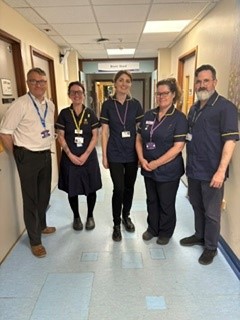
End of life staff at University Hospitals Plymouth NHS Trust
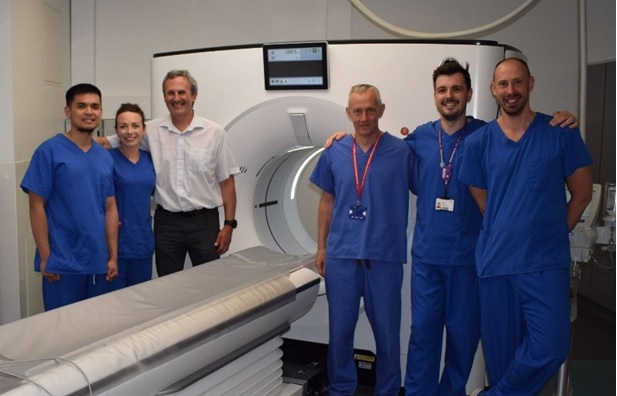
CT radiographers at University Hospitals Plymouth NHS Trust
PEOPLE across the South West will benefit from faster tests, checks and scans closer-to-home after the government today confirmed funding to open and expand Community Diagnostic Centres (CDCs) across the country and in the region.
Bideford in Devon is one of four new CDCs across the country, all equipped with state-of-the-art facilities, that will open summer 2027.
The CDC will be located on the site of the Bideford Community Hospital, creating a multi-agency Bideford health campus which supports improved health and wellbeing outcomes and healthcare access for the community.
Services will include x-ray facilities and will be supported by audiology, ultrasound, Dexa, phlebotomy, cardiology, and other services.
Patients will be offered one-stop clinics which will mean during a single visit they will receive an outpatient appointment, diagnostic tests, and interpretation and communication of results.
In addition to the new CDC at Bideford existing CDCs at the NHS Nightingale Hospital in Exeter, Bridgwater, Colin Campbell Court in Plymouth and the centre at West Swindon Health Centre, will be among 17 CDCs across the country to receive investment to expand their offer.
They will be physically expanded with new rooms and state-of-the-art scanning and diagnostic equipment more patients will have access to a greater range of tests at their local centre, reducing the need to travel to hospital.
Dr Trevor Smith, Regional Medical Director for NHS England South West, said: “The new centre at Bideford and expansions of some of our current CDCs means patients will get faster, easier, and higher quality care closer to home when they require crucial diagnostic scans, tests and monitoring in the South West.
“These improvements are testament to the hard work, professionalism and innovation of staff across the region, to make sure people receive the right care and support they need at the right time, making a difference to their health and wellbeing.”
Wes Streeting, Health and Social Care Secretary, said: “Thanks to this government’s investment and modernisation, the NHS delivered a record number of tests and scans last year. But there’s still a long way to go before we’re catching disease on time.
“I was one of the lucky ones – my kidney cancer was caught early, and today I’m living cancer-free. But it shouldn’t be a question of luck. The NHS should be there for all of us when we need it, catching illness earlier so we can treat it faster.
“As part of the record investment we are making in the NHS’s recovery, these new CDCs are part of the biggest expansion in NHS diagnostics in a generation – continuing the progress we’re making and helping save lives.
“We’re not just investing in more, but delivering differently. The NHS should fit around people’s lives, not the other way around. CDCs mean patients can get tests, checks and scans while they’re doing their shopping on the weekend or on the way to pick up the kids from school – without travelling across town to a hospital.
“This is part of the extra £26 billion the government is investing in a new, modern NHS that is fit for the future.”
A further 15, elsewhere in the country, will receive targeted enhancements, adding specialist kit, new clinic rooms or additional services such as audiology, ophthalmology and respiratory care to existing facilities.
The 36 centres announced nationally today, backed by £237 million of government investment, will accelerate this progress further, significantly boosting NHS diagnostic capacity and delivering more care in local communities.
In 2025, the NHS in England carried out a record number of key diagnostic tests – almost 30 million – and has carried out an additional 3.5 million tests in the first 18 months of this government compared to the 18 months prior to July 2024.
CDCs are local hubs that provide patients with access to a wide range of tests, including MRIs, CT scans and ultrasounds.
CDCs are located in convenient community settings – from high streets and retail parks to leisure centres – and many are open 12 hours a day, seven days a week, so patients can access tests closer to where they live, without needing to travel to hospital.
From 1 April 2026, the RSV vaccine is now available for free on the NHS for adults aged 75 and over, adults living in a care home for older adults, and pregnant women.
The RSV vaccine helps protect against respiratory syncytial virus (RSV) infections. RSV is a common virus, and almost all children get an RSV infection before they turn 2 years old. However, while most people will only get cold-like symptoms, it can make babies and older adults seriously ill and cause breathing problems like pneumonia and bronchiolitis (a chest infection that affects babies). Having the RSV vaccine can help reduce the risk of serious illness.
Dr Julie Frier, Consultant in Public Health and Screening and Immunisation Lead for NHS England South West, said: “RSV can be a very severe illness and is the cause of thousands of hospital admissions for babies and older people each year.
“The RSV vaccine is now being offered to everyone living in a care home for older adults, all adults over 75 as well as pregnant women. A single dose can give protection, and I would urge care home residents and their families to speak with their care home team and adults over 75 to speak with their GPs to arrange vaccination as soon as possible. If you’re pregnant, please speak with your midwifery team or GP practice about getting the RSV vaccine.”
Dr Alasdair Wood, Consultant in Health Protection and Vaccine Preventable Disease Lead at UKHSA South West, said: “RSV lung infection is less well known than COVID or flu but for older adults it can be particularly dangerous and puts thousands in hospital each year with a risk to life.
“New evidence from the UK public health agencies shows the vaccine cuts your risk of being hospitalised by around 75% – so it’s great news that the vaccine is now available to everyone aged 75 and over, including all those aged over 80. And we also know that the RSV vaccine for pregnant women is providing excellent protection to newborn babies. If you’re eligible, be sure to take up the offer and get the best protection possible against a nasty case of RSV pneumonia.”
A family from Somerset, whose previously active and independent mother became critically ill with RSV, is urging people over 75 to get protected. Sandra Aplin says her mother, Alice Hodges, 82, spent two weeks in hospital after what began as ‘just a cold’ got dramatically worse in December 2024.
Sandra said: “At first, mum said she felt pretty awful and had a streaming nose but thought it would pass. But just a few days later she rang me at five in the morning to say she could hardly breathe. She was so bad we just couldn’t move her.”
Paramedics arrived quickly and took her straight to Musgrove Park Hospital, in Taunton, where she was diagnosed with RSV. “We’d never even heard of RSV before,” Sandra said. “When the nurse told me, I had to Google it.”
At the hospital, Alice became extremely unwell and confused. “We didn’t think she was going to make it,” Sandra said. “She was so distressed, trying to get the mask off that was helping her to breathe. To see mum like that was awful; she’s always been the one caring for everyone else.”
Alice remained in hospital for two weeks before she could return home, and, sadly, the illness has left lasting damage to her heart. She now tires easily, has much less stamina than before, and needs a pacemaker.
Only a single dose of the RSV vaccine is needed to provide protection. Previously it was only pregnant women and adults aged 75 to 79 who could receive an RSV vaccination, but now the offer has been extended to all adults living in a care home for older adults and all adults over 75.
If you are a resident of an older adult care home, speak with your care home team about getting the RSV vaccination. For adults over 75 who are not residents of older adult care homes, you can contact your GP practice for an appointment.
Pregnant women are eligible for the RSV vaccine from 28 weeks of pregnancy to help protect babies from serious lung infections. , Speak with your midwifery team or GP practice about getting the RSV vaccine.
If you are aged 75 and over, you may also be eligible for a Spring COVID-19 vaccination (available from 13 April to 30 June). If you are eligible for both your RSV and Spring COVID-19 vaccine, speak with your GP practice or care home team as you may be able to receive both vaccinations at the same appointment.
For further information on RSV and the vaccine, visit the NHS website.
Board members representing health and care across Cornwall, Isles of Scilly and Devon have agreed (Thursday 26 March) several plans and strategies that provide a clear direction for the future of health and care services across the two areas.
The joint committee, known as the South West Peninsula Board, received five-year commissioning plans for both Cornwall and the Isles of Scilly and Devon, setting a direction for a more community facing model of care and support.
In line with this, Devon agreed a new dementia strategy and Cornwall and Isles of Scilly agreed a new Carers’ strategy, in partnership with Cornwall Council that will enhance support for carers.
Cornwall and Isles of Scilly also signed off their green delivery plan, being taken forward with Volunteer Cornwall.
Reports on system performance, quality and finance and updates from partners and ICB committees were also presented alongside a series of patient stories focused on local women’s health services.
John Govett, Chair NHS Cornwall and Isles of Scilly and NHS Devon Integrated Care Board (ICB), said: “I am pleased to see the positive progress agreed at today’s meeting, reflecting the strength of our partnership working across the system.
“The decisions we’ve taken mark an important step forward in improving local health and care services, with a clear focus on delivering better, more joined-up support for our communities, wherever possible working with our community and voluntary sector and local authority partners.
“By continuing to work collaboratively, we are building a stronger, more sustainable system that is better able to meet the needs of the people we serve.”
Five-year commissioning plans
Cornwall and Isles of Scilly’s five-year commissioning plan ‘Caring where it matters’, further increases investment in neighbourhood health services, allowing us to continue to deliver more care closer to home, and increasingly shift our focus from sickness to prevention.
We want all children to have the best possible start in life, for adults to be supported to live well and older people to remain independent for as long as possible, with more support at home, better access to rehabilitation and faster urgent care in the community. – supported by faster and more local diagnostics.
We have prioritised improving mental health services and are continuing our plans to improve waiting times for urgent and emergency care, as well as for those awaiting planned care. Our plans will be enabled by greater deployment of digital and AI capabilities.
A link to more information on our website is here.
One Plan for Devon, a five-year commissioning plan that sets out how health and care services will evolve to meet growing demand.
With Devon’s population increasing and ageing, and more people living with long-term conditions, the plan responds to the need for services to change and adapt.
More information about the One Plan for Devon is here.
Cardiology and cardiovascular services incorporated into wider planning for Devon
The Board reflected and agreed that cardiology should be considered as part of a future whole-system approach, rather than proceeding as a standalone specialty review.
This would be within the wider context of the 10-Year Health Plan, with its mandate for strengthening preventive work and providing more care close to home.
A link to more information on our website is here.
A dementia strategy for Devon
The Committee endorsed a refreshed dementia strategy for the next three years as a system-aligned framework for dementia delivery across Devon.
Libby Ryan Davies, Chief Strategic Planning and Commissioning Officer said: “I welcome the Board’s endorsement of the refreshed Devon Dementia Strategy, which reflects the strong partnership working already underway across our system.
“We recognise that dementia can have a profound impact on people and their families, often bringing significant emotional and practical challenges.
“This is an important step forward as we move into delivery, with an early focus on improving post-diagnostic support and strengthening care for people in care homes, working closely with our VCSE partners.
“Together, we are committed to ensuring people affected by dementia in Devon receive the right support, at the right time, in a way that is joined up and meets the needs of our local people.”
A carers strategy for Cornwall
A new strategy to improve support for carers in Cornwall was approved.
Susan Bracefield, Chief Clinical Officer, said: “We welcome the approval of the new all-age Carers Strategy for Cornwall and the Isles of Scilly. It is a positive step in recognising the vital contribution of unpaid carers and the challenges they face.
“The focus on a single, life-course approach and earlier support is particularly important, helping ensure carers are identified and supported before they reach crisis point.
“We look forward to working with partners to strengthen support for carers across the peninsula.”
